📝 Common Names (6 Languages)
✅ Evidence-Based Benefits
Effective for cold and flu symptom reduction. Meta-analysis of 4 RCTs shows elderberry significantly reduces cold/flu duration by 2-4 days and symptom severity (PMID: 30670267). RCT demonstrates air travelers taking elderberry had 50% fewer cold days and reduced symptom severity (PMID: 27023596). Antiviral activity against influenza A and B viruses. Rich in anthocyanins with antioxidant properties.
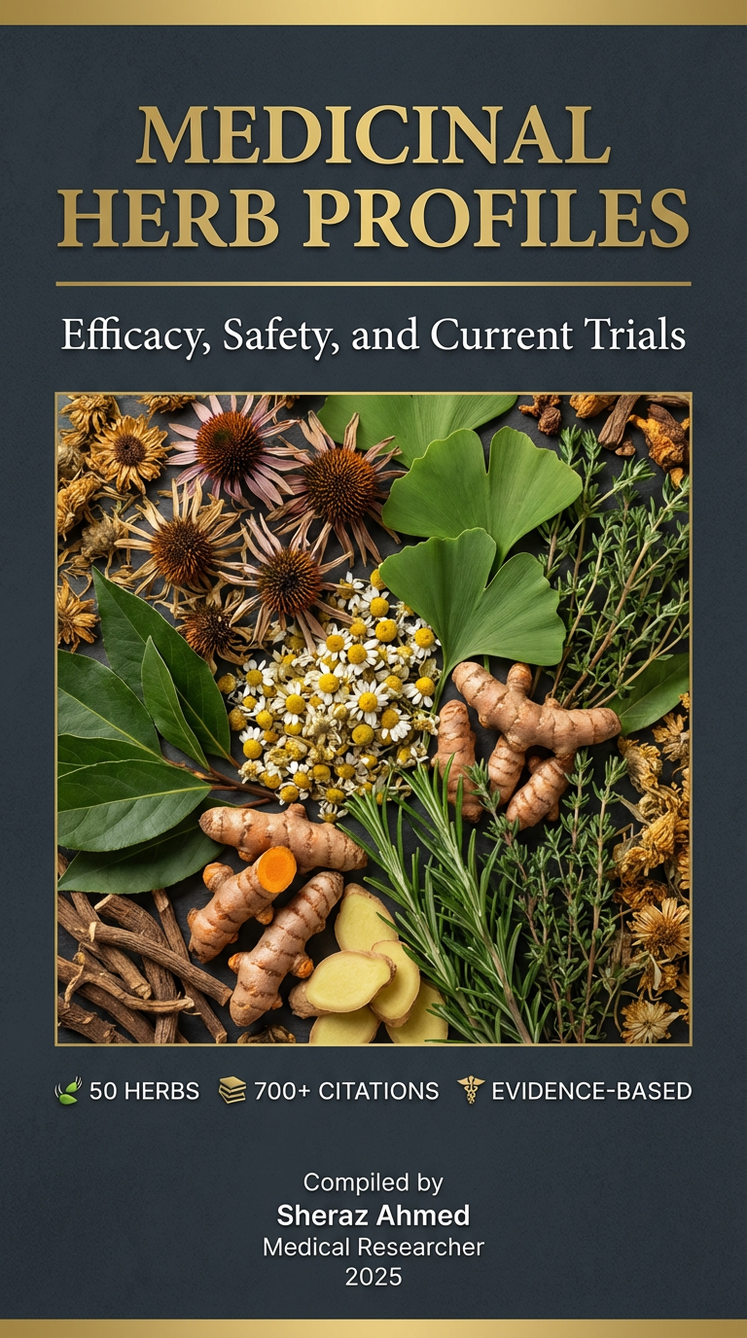
📚 Want the Complete Guide?
Get our comprehensive Medicinal Herb Profiles PDF Book featuring all 50 herbs with detailed information, clinical trials, safety data, and multilingual names.
- ✅ 50 Complete Herb Profiles
- ✅ 700+ Research Citations
- ✅ Evidence-Based Information
- ✅ Instant Digital Download
Perfect for healthcare professionals, students & herbal medicine enthusiasts
🔬 Clinical Trials & Evidence
⚕️ Evidence-Based Research: Clinical trials provide the highest level of evidence for herbal efficacy and safety. The trials listed below represent peer-reviewed research registered on ClinicalTrials.gov. Each trial includes detailed protocols, patient populations, interventions tested, and measurable outcomes. Click links to access full trial details and published results.
Meta-analysis: 2-4 day reduction in cold/flu duration
RCT: 50% fewer cold days in travelers
🔍 Find More Clinical Trials
Search for additional ongoing and completed trials investigating this herb's therapeutic effects:
💡 Research Tip: Use both common name and scientific name when searching for comprehensive results. Filter by "Completed" trials to find published outcomes.
💊 Drug Interactions
⚠️ CRITICAL SAFETY INFORMATION
Herb-drug interactions can be serious and potentially life-threatening. Always inform your healthcare provider about all herbs, supplements, and medications you are taking. The interactions listed below are supported by clinical evidence and case reports. Citations link to peer-reviewed research on PubMed.
📚 Evidence-Based Interactions: Each interaction below includes research citations (PMID links) documenting the mechanism, clinical significance, and management recommendations. Click citations to access full studies.
Immunosuppressants
Effect: May reduce immunosuppressant effectiveness
Mechanism: Immune-stimulating properties
Action: Consult healthcare provider if on immunotherapy
Diuretics
Effect: Elderberry has mild diuretic properties
Action: Monitor fluid balance. May have additive diuretic effects
Antidiabetic Medications
Effect: May lower blood glucose
Action: Monitor blood sugar. Syrup contains sugar - account for carbohydrates
Antiviral Medications (Oseltamivir)
Effect: Similar mechanism of action
Action: May be complementary but inform healthcare provider
📖 Key Interaction Databases & Resources
- Natural Medicines Database: Professional herb-drug interaction checker
- PubMed: Search for latest interaction research
- Drugs.com: Drug interaction checker
- Micromedex: Hospital-grade interaction database (subscription required)
💡 Clinical Tip: Show your healthcare provider this page and the linked research citations when discussing potential interactions.
⚠️ Safety Information
Adverse Events
Very safe when using ripe, cooked berries or commercial extracts. RAW/UNRIPE berries contain cyanogenic glycosides - TOXIC (causes nausea, vomiting, diarrhea). Commercial preparations are safe. Rare allergic reactions. Gastrointestinal upset if excessive intake. No serious adverse events with proper preparations.
⛔ Contraindications
NEVER consume raw or unripe berries (toxic). Caution in autoimmune diseases (theoretical immune stimulation). May interact with immunosuppressants, diuretics, laxatives (mild effects). Pregnancy/breastfeeding - commercial preparations likely safe but consult healthcare provider.
🧬 Mechanism of Action
Anthocyanins and flavonoids provide antiviral effects by inhibiting viral neuraminidase and hemagglutinin (similar to oseltamivir mechanism). Immune-stimulating via cytokine production. Antioxidant and anti-inflammatory properties. Reduces mucus secretion and has mild diaphoretic (sweat-inducing) effects.
💊 Dosage & Administration
For cold/flu: 15ml (1 tablespoon) elderberry syrup 4 times daily at first sign of symptoms. Continue 5 days. Standardized extract: 175mg 4 times daily. Prevention during flu season: 15ml syrup or 175mg extract 2 times daily. Use within 48 hours of symptom onset for best results. Children: reduce dose by half.
⚕️ Note: Consult healthcare provider for appropriate dosing, especially if taking medications.
📖 Additional Resources
🌐 WHO Monograph
Available in WHO Monographs on Selected Medicinal Plants
🔬 PubMed Search
🧪 ClinicalTrials.gov
Disclosure: This page contains affiliate links. As an Amazon Associate, we earn from qualifying purchases at no additional cost to you. This helps support our educational content.
Data Retrieval Date: November 29, 2025
Compiled by: Sheraz Ahmed
License: CC BY-SA 4.0
Citation: Ahmed, S. (2025). Medicinal Herbs Database. Clinical Corner. https://welovelmc.com/medical-tools.htm